Overview
Poseidon was UC Riverside's first-ever liquid-fueled rocket. I joined the team relatively late in the design stage, with an engine already built, tested, and blown up prior to my joining the team. However, I immediately immersed myself in the team, and in the Airframe subteam responsible for Poseidon's major structure.
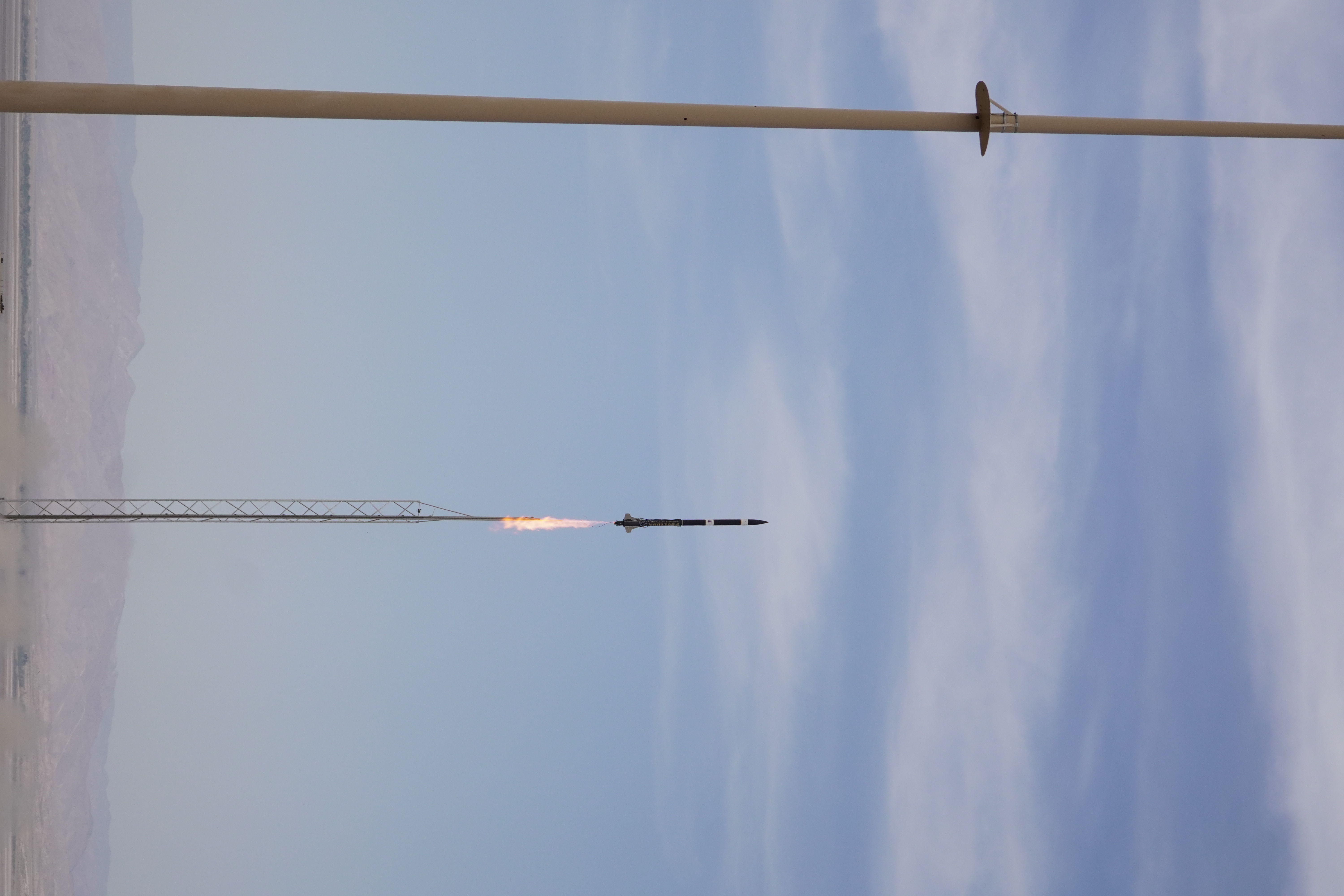
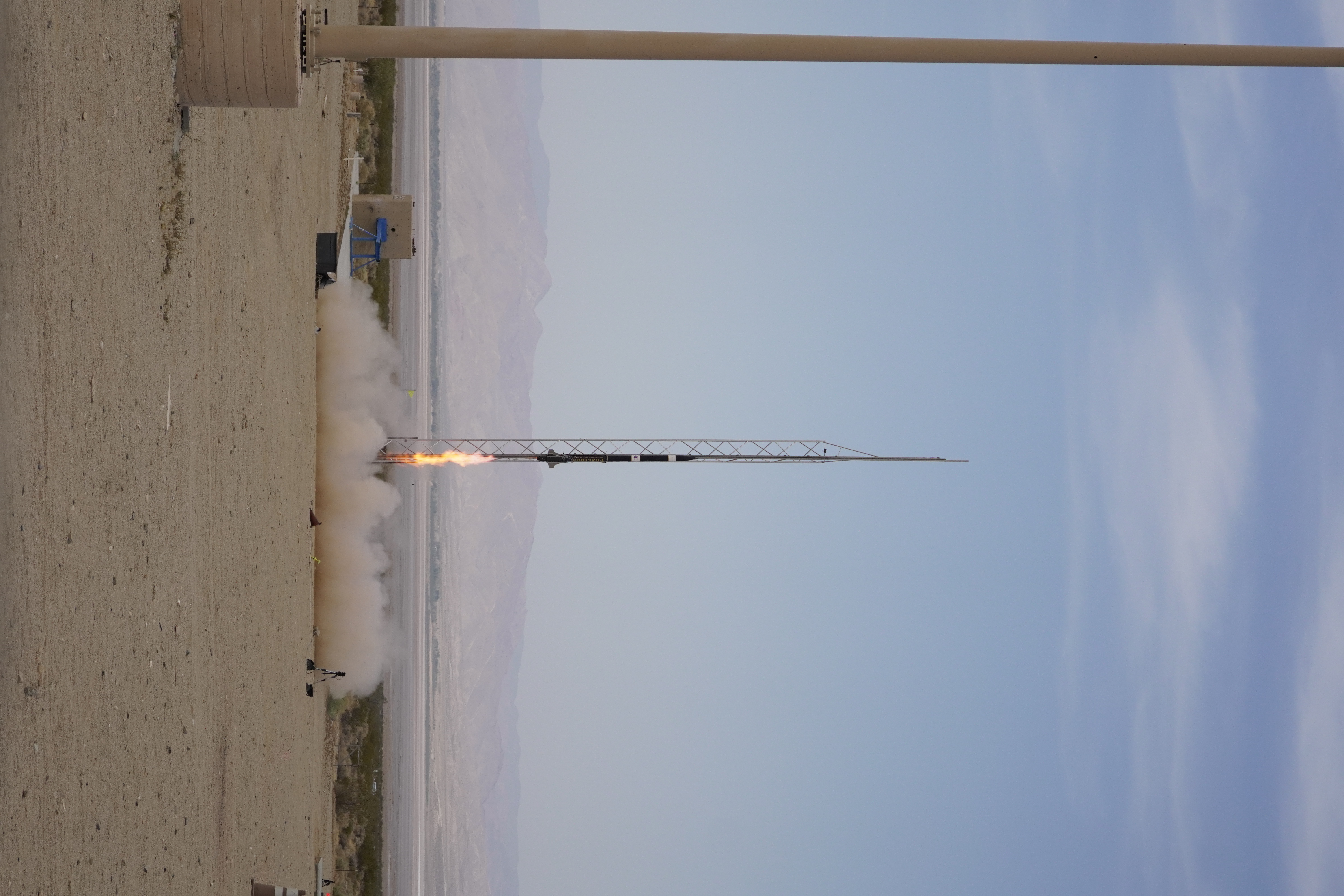
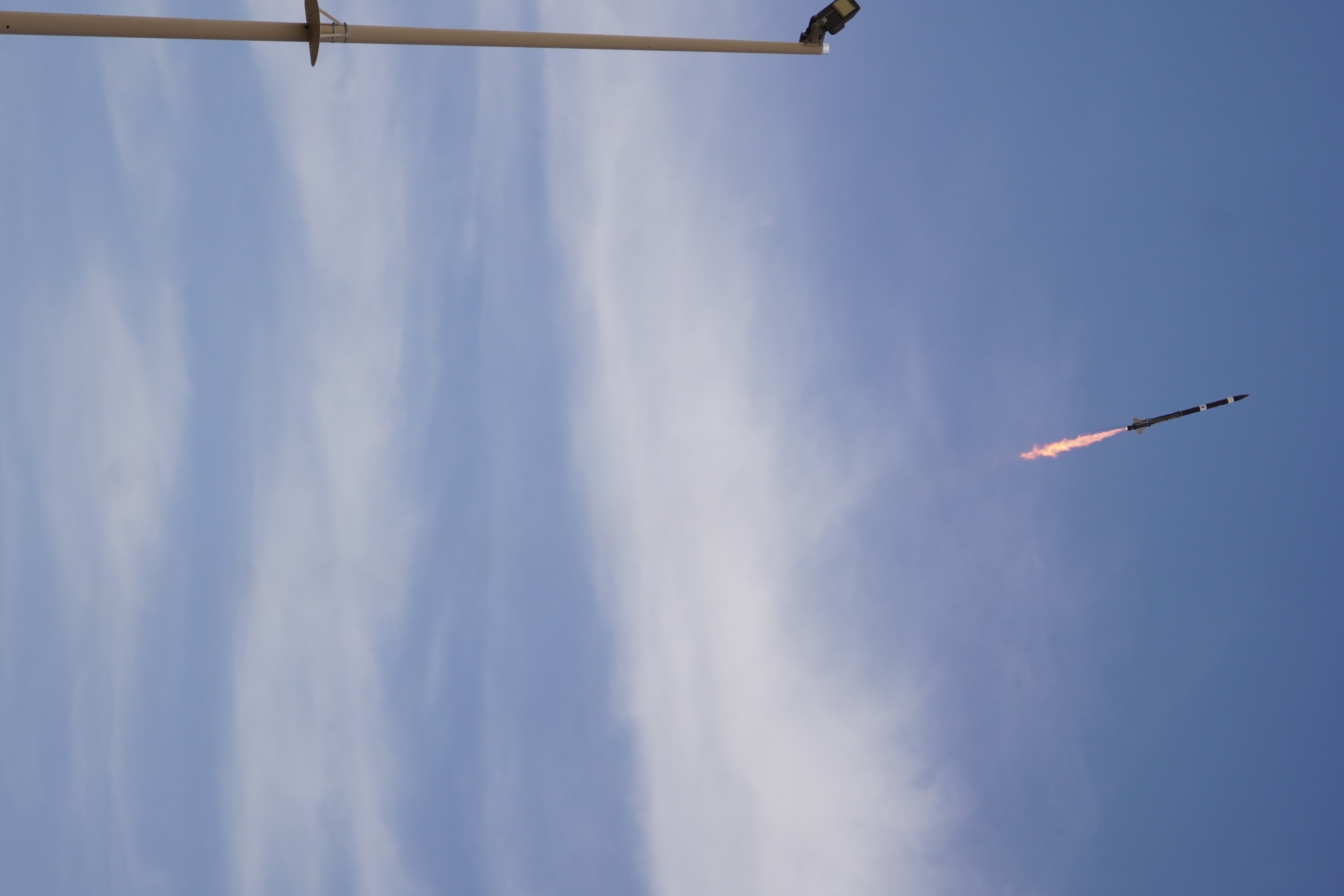
Poseidon was built to fly in the FAR-OUT competition. After a full competition day of failing to get in the air, Poseidon finally took to the skies on day two. After a picture-perfect flight to 7500 feet and a seamless recovery operation, Poseidon took home two awards: first prize in its altitude category, and the prize for the most efficient liquid fuel rocket in the whole competition, with 136s of specific impulse.
Technical Details
Poseidon's airframe consists of a structural tank in the aft section and a long set of composite tubes in the forward section, topped by a custom-laid-up nose cone. I was directly involved in fabrication on these components, performing composite layups and design and printing work on the molds used to make them.
I also designed and manufactured the critical rail guides: the components that interface Poseidon with the launch rail, keeping it pointed upright as it builds enough speed for the fins to provide stability.
Gallery
Results & Learnings
Poseidon's dominant performance at FAR-OUT established UCR as a force to be reckoned with in the world of collegiate liquid rocketry practically overnight. Over the course of getting to the pad, I've learned a great deal about nearly every facet of liquid rocket design, and especially about composite structures. During the launch campaign, I gained experience in conducting launches with large teams instead of just solo, and in adapting to external constraints from competition rules.
Flying Poseidon was a tremendous honor to be a part of. I'm proud to have worked on it every time I see it standing proudly in the corner of our team's workspace. I've continued with Highlander Space Program since the launch of Poseidon, leading work on the next rocket, TANGERINE, and now stepping into the role of Team President for the 2026-27 school year.