Overview
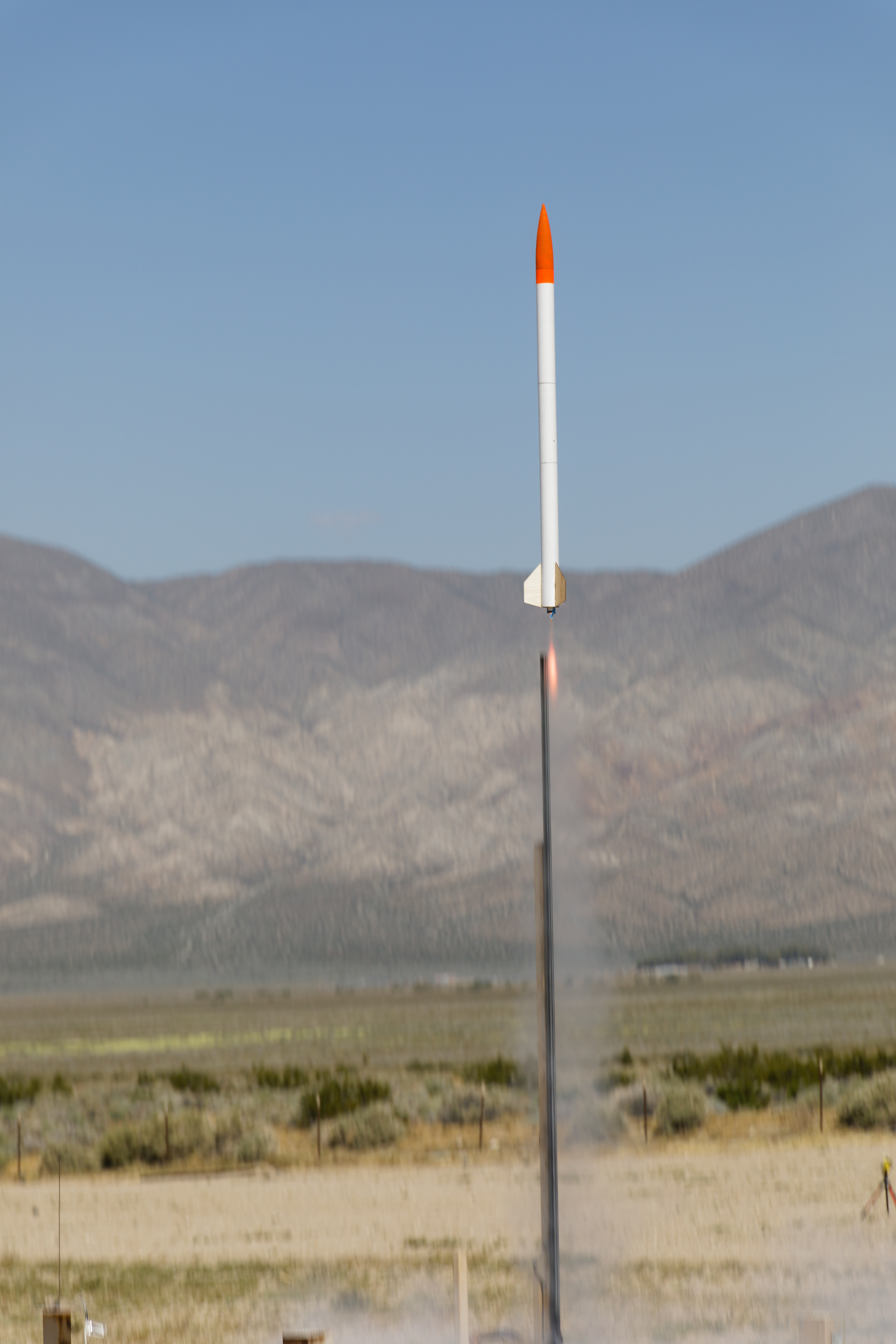
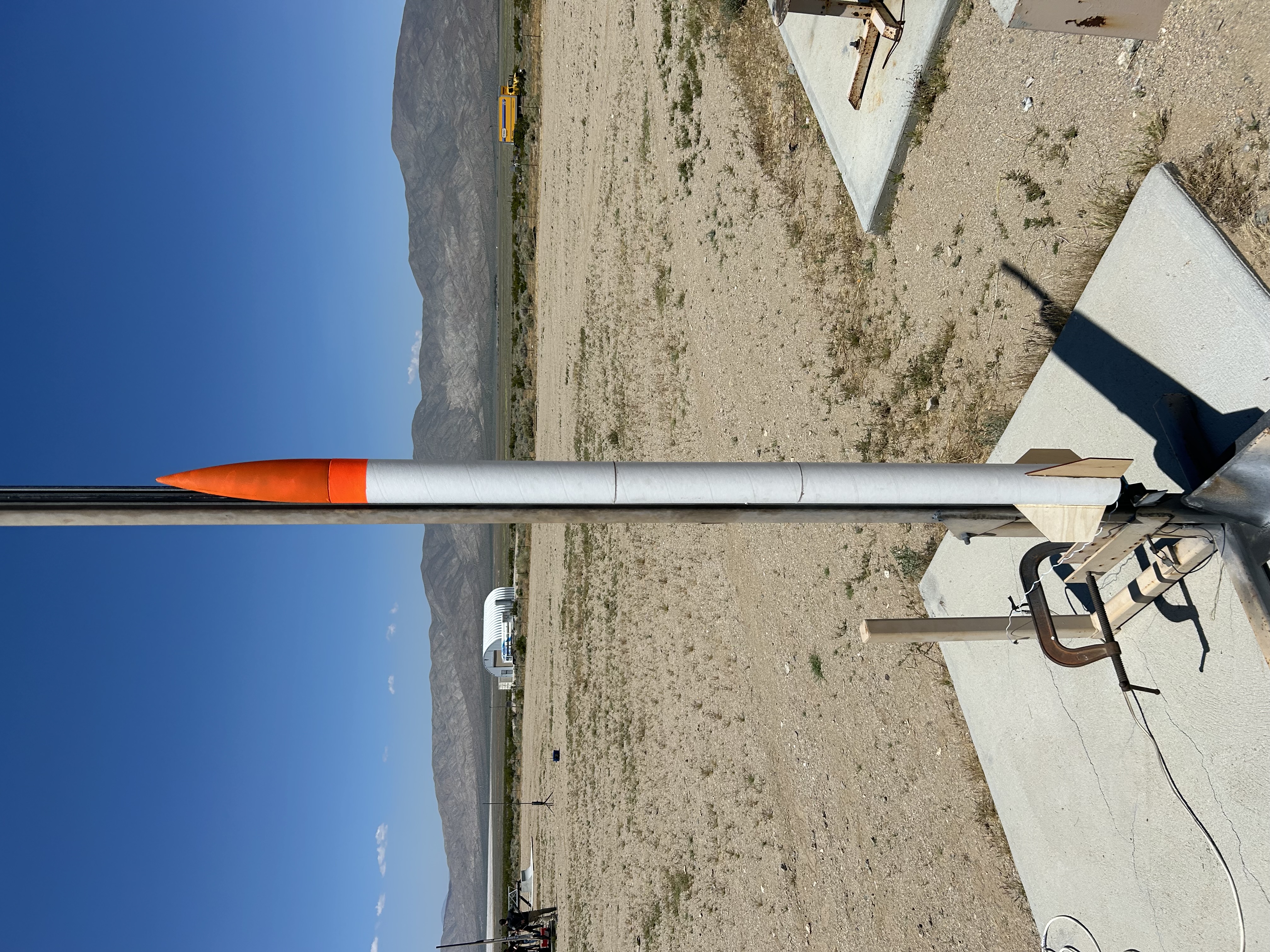
Photon is a small, scratch-built solid rocket that was meant to deliver nearly all the function of a Level 3 high power rocket in the low-cost form factor of a Level 1 project.
Technical Details
While only using a small, 29mm diameter motor and a low-cost airframe constructed of plywood and cardboard with an off-the-shelf injection molded nose cone, Photon demonstrated critical features found in all level 3 rockets. First, Photon used two independent, redundant flight computers to activate two parachutes in sequence in a scheme known as dual-separation dual-deploy. This mechanism allows Photon to descend quickly from apogee under a small parachute, and then deploy a much larger parachute a few hundred feet above the ground to come to a soft landing. This technique minimizes the time spent descending, and prevents the rocket from drifting too far from the launch site. Photon packs this big-rocket capability in a small form factor to serve as an important demonstration of a key system for future projects.
Photon also demonstrated another essential technology for larger rockets, that being an ability for the rocket to communicate with the ground during and after flight. Using a scratch-designed Arduino and CircuitPython implementation, Photon successfully acquired GPS data, and transmitted it through all phases of flight to a custom ground station, which reported its landed location to a high degree of accuracy. Photon successfully demonstrated this essential capability in a low-risk, low-altitude flight profile.
Gallery
Results & Learnings
Photon performed exceptionally well across three flights. The biggest room for improvement is in the design of the Arduino GPS unit, which just barely fit inside the airframe tube. It's bulky and heavy, and smaller systems would provide significant benefits. There are also some lessons in fin design - fins had to be repaired after all three landings, since they were cut against the grain of the wood. Overall, though, Photon has been highly successful across three flights, more than any other of my rockets to date.