Overview
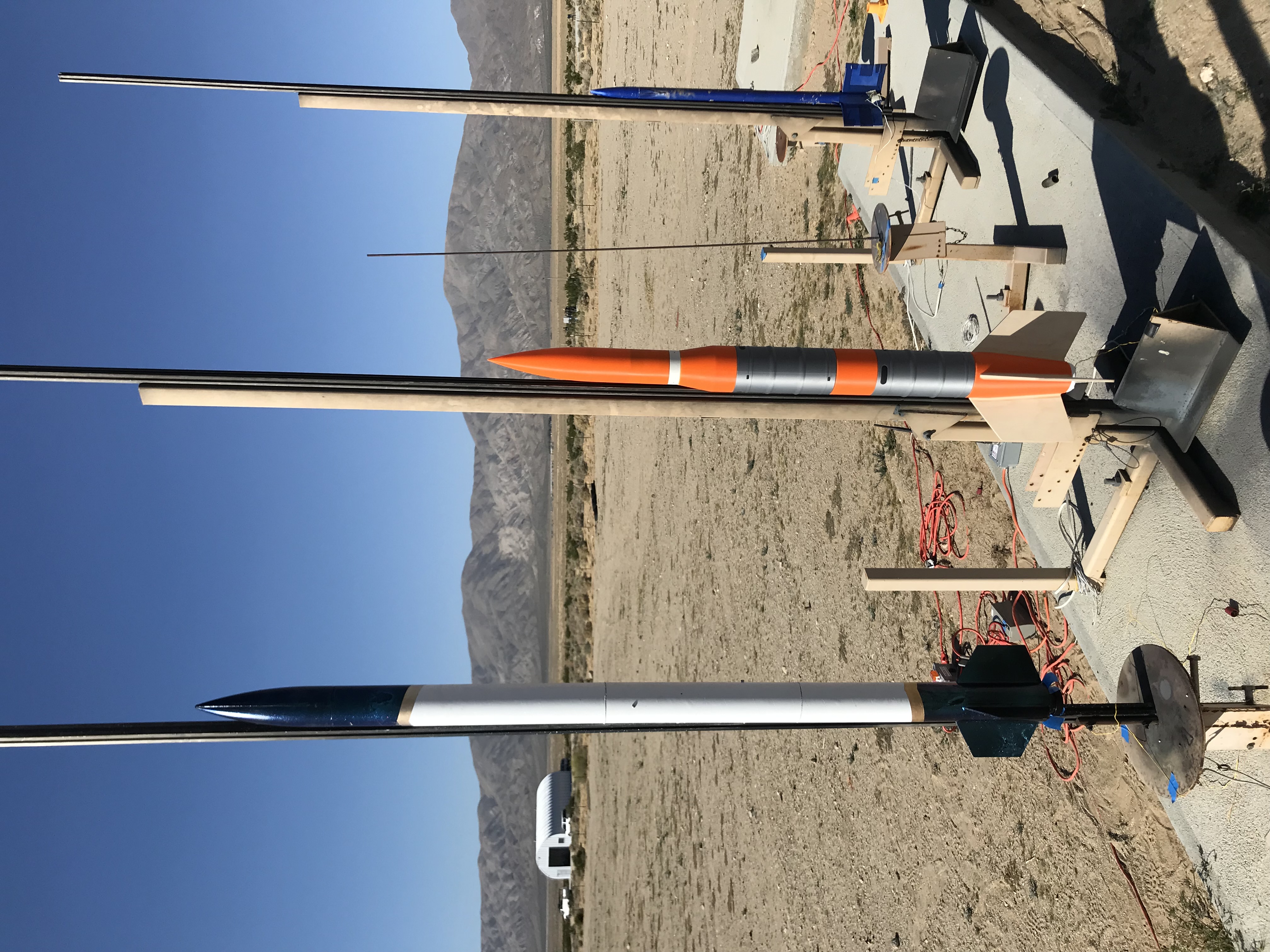
Named for a particle that can travel faster than light in some materials, Muon began with a dream to break the sound barrier with a Level 1 rocket. However, that goal in and of itself isn't terribly hard - just put a tube around a rocket motor and accept your fate of never seeing the rocket again. I didn't want to settle for that. So Muon grew into a first attempt at the dual-separation dual-deploy system later successfully demonstrated on Photon.
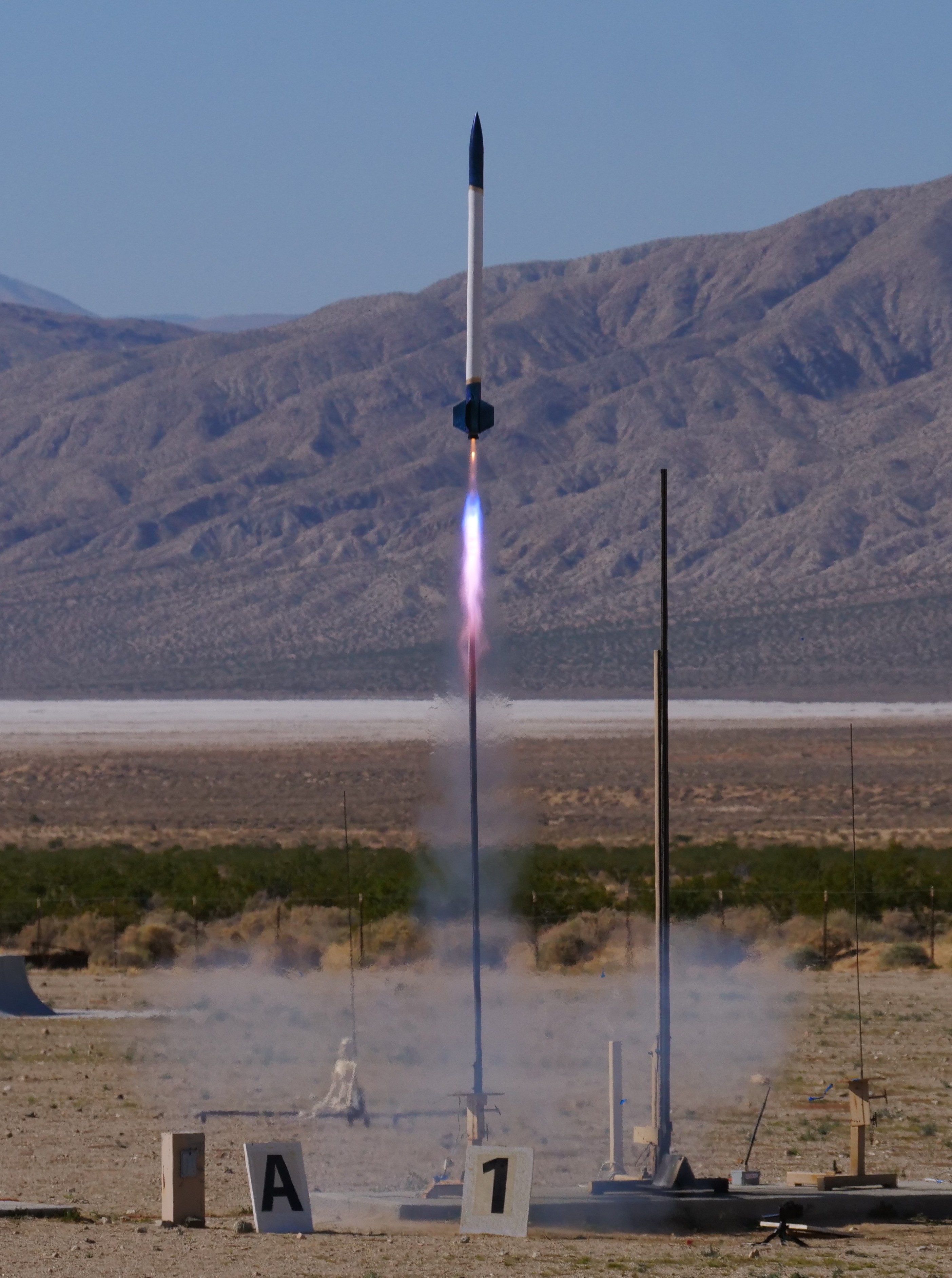
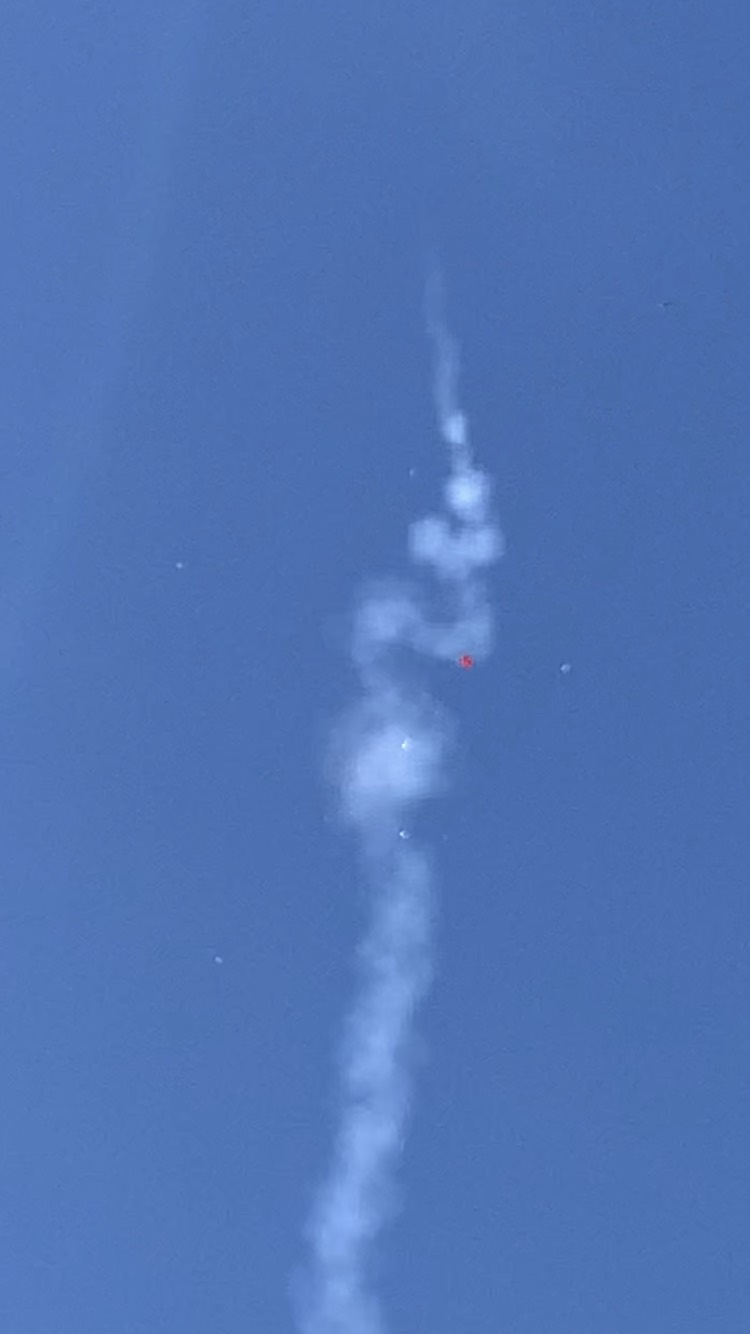
Launch day did not proceed according to plan. Despite a stunning takeoff and a near perfectly straight flight (even with hand-aligned fins!), near the end of the burn, Muon's thin cardboard walls gave out. The rocket flexed, then shattered into a thousand shards.
Technical Details
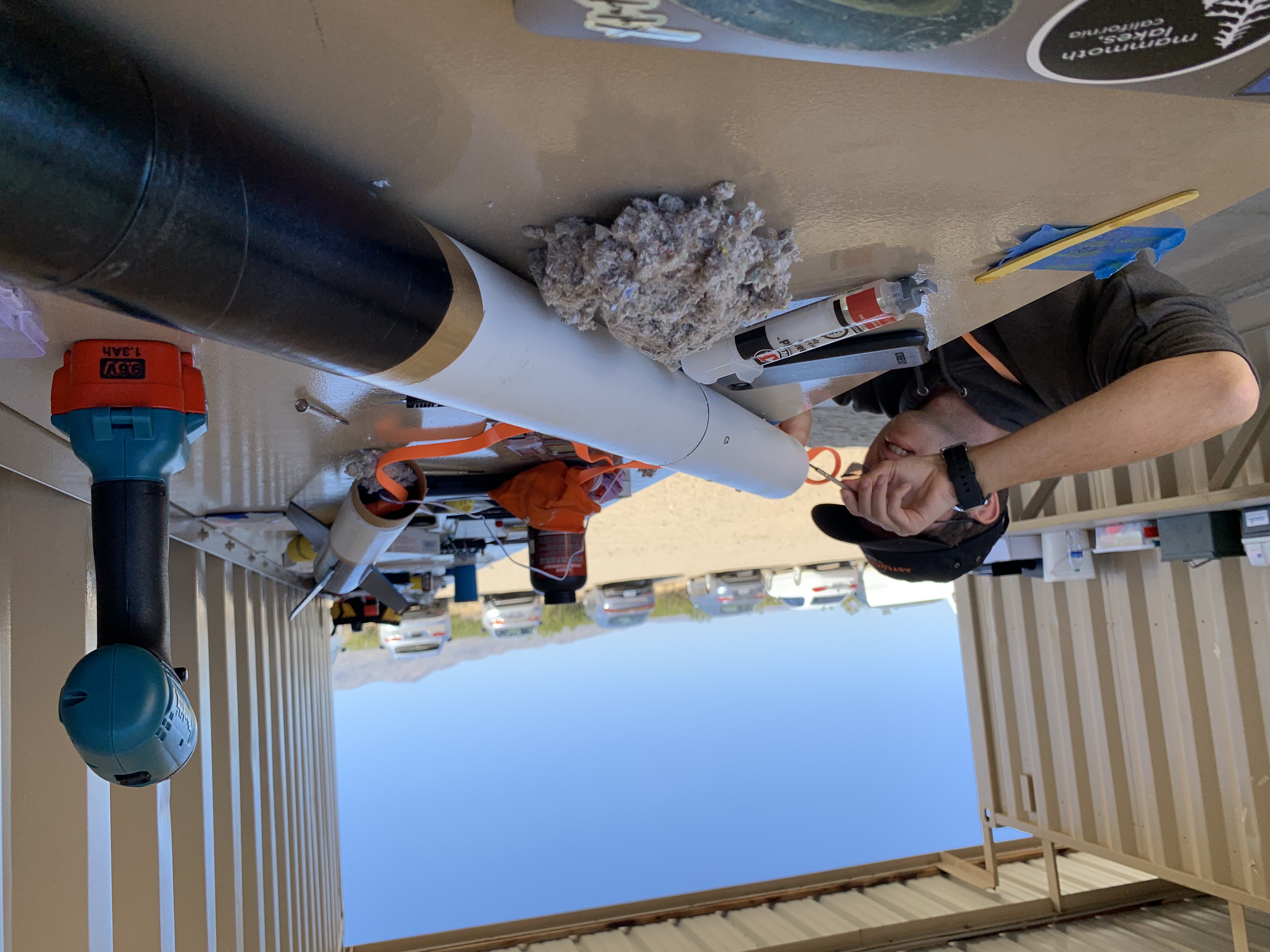
The project began with assembling the flight computer. The single, critical flight computer on Muon was just one of several questionable decisions I made on this rocket. However, I learned a valuable skill in assembling the near-microscopic components of the flight computer, and testing it to ensure that it fired all pyro channels properly.
Muon's fins and aerostructure also represented a new skill: laser-cutting custom structures for use on rockets. The fins were custom designed for maximum performance and lasercut from plywood. On the aft centering ring, the phrase "DARE MIGHTY THINGS" is engraved. That quote, from Theodore Roosevelt, proved particularly apt on launch day.
Gallery
Results & Learnings
Launch day didn't exactly go according to plan. The rocket had a beautiful takeoff, flying straight and true (in spite of a hand-aligned fin section!)...for about one second. In the last few moments of the engine burn, the rocket flexed, turned, and then shredded into a thousand tiny shards.
Rocket confetti rained down on the FAR site. I managed to recover the nose cone, and the fin can, miraculously still intact, got returned to me a few months later. From those pieces and the grainy footage, I was able to piece together what happened. The nose of Muon flexed, making the airframe act like a control surface to pitch the entire rocket horizontally while near top-speed. This rotation was so violent that the centrifugal force was enough to back the motor mount out of its laminated outer coating and push it a good chunk of the way out the back of the rocket.
Despite the dramatic failure, Muon taught me a lot. The surface mount and lasercutting skills have been directly applied to virtually every rocket project I've worked on since. And more than that, I learned resilience. I learned to take failures in stride and roll with the punches. The full quote from President Roosevelt reads "Far better it is to dare mighty things, to win glorious triumphs, even though checkered by failure, than to rank with those poor spirits who neither enjoy nor suffer much, because they live in the gray twilight that knows not victory nor defeat." Being checkered by failure is a critical element of winning those glorious triumphs. And for that, I'm glad I built Muon, and I'm proud of the wreckage of it every time I see it.