Overview
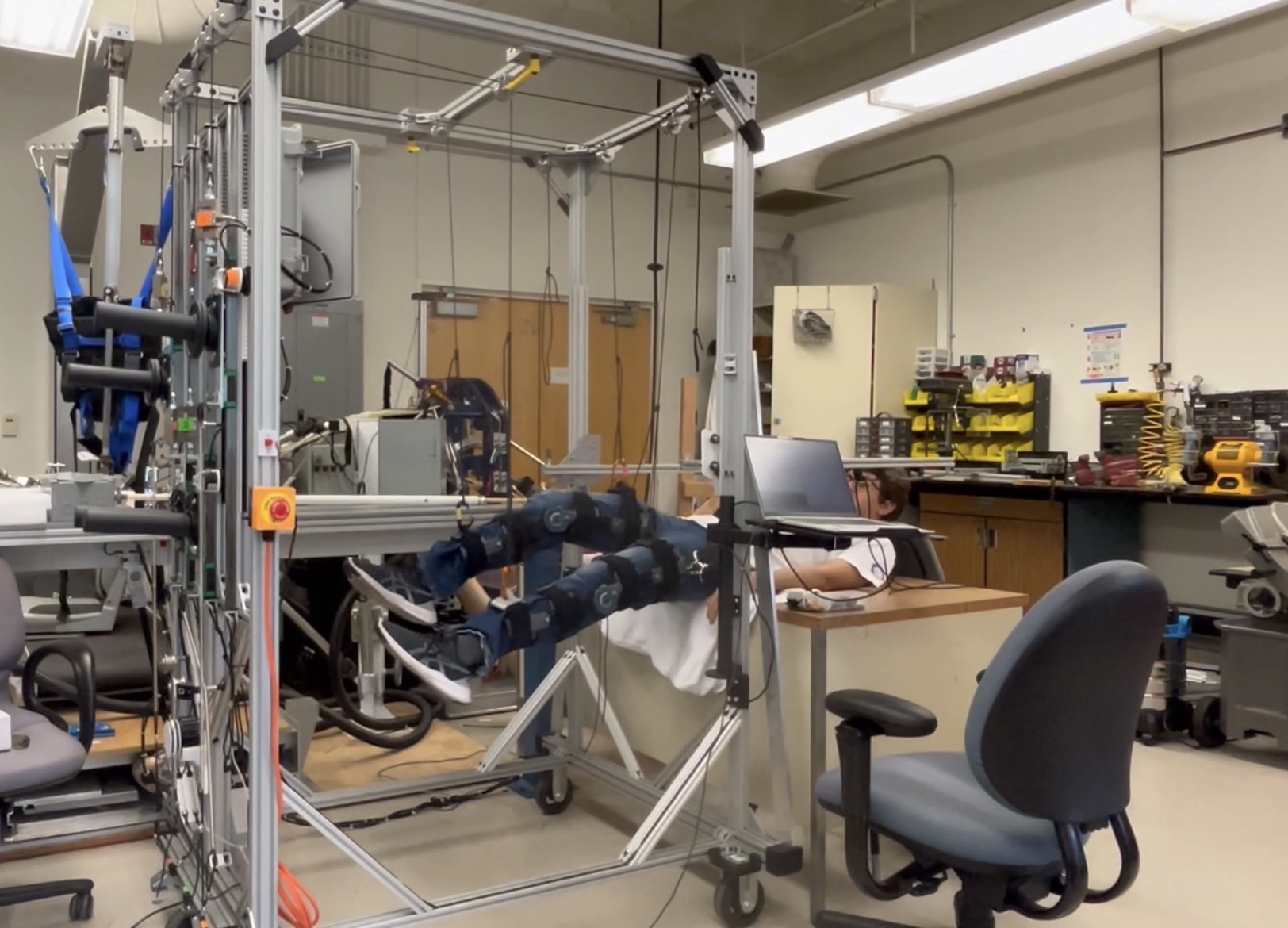
AirSTEP is a research project under Dr. Dave Reinkensmeyer at UC Irvine to create a novel system to promote recovery in spinal cord injury patients by allowing them to practice walking while supine with the weight of their legs supported by the device.
My work on AirSTEP in 2023 involved developing new hardware in response to patient feedback to improve the patient experience.
Technical Details
AirSTEP builds on existing research in rats indicating that large degrees of lower body mobility can be recovered even when the connection between the brain and lower spine is entirely severed. The actual mechanics of walking are controlled reflexively by nerves in the lower spine. This fact combines with indications in rat trials to lend considerable credence to the notion that patients with spinal cord injuries, even severe ones, can recover a degree of walking ability by providing them the opportunity to simulate walking in a minimally impactful situation.
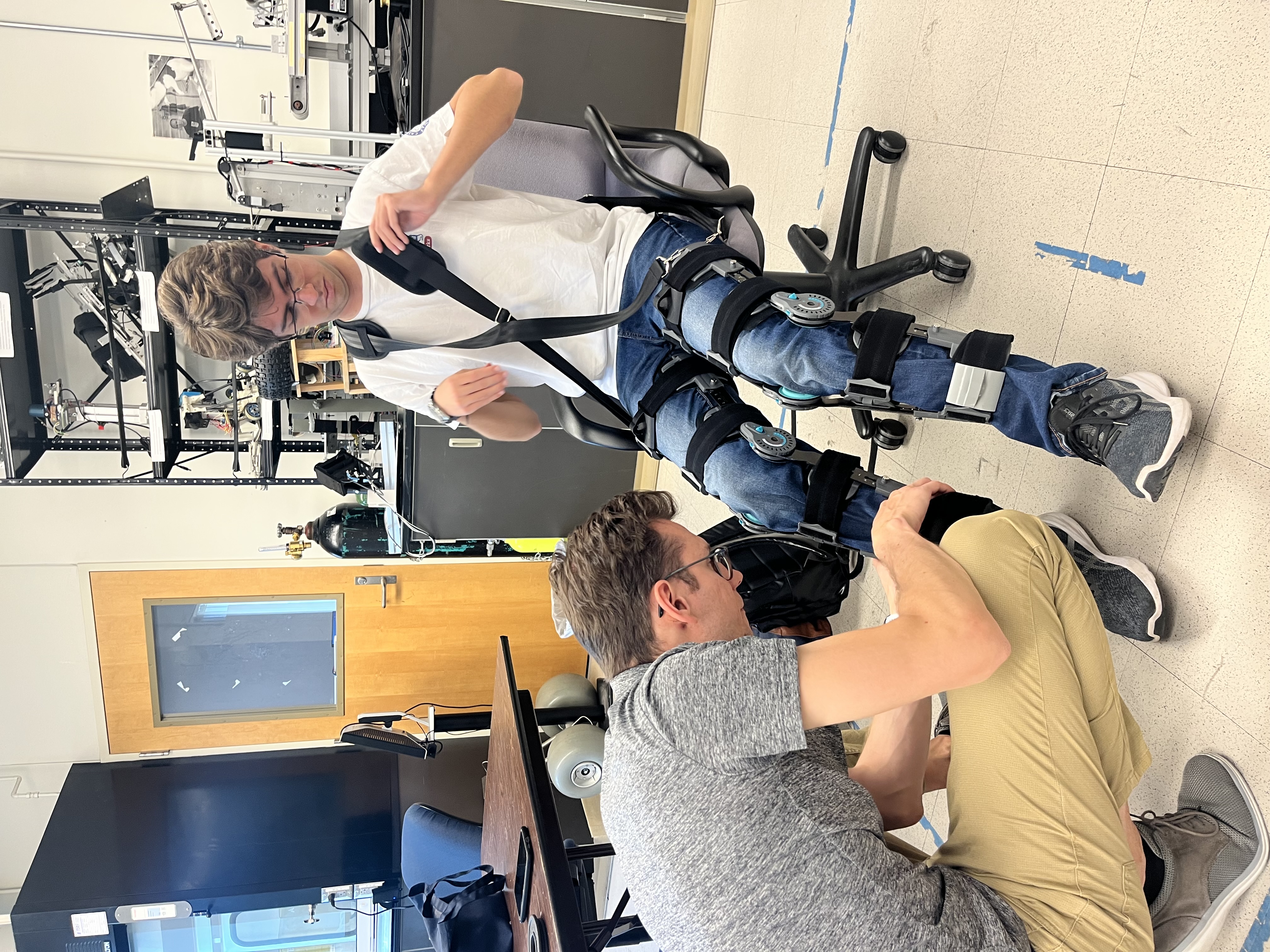
In service of this, AirSTEP provides an environment where a patient's legs can be suspended midair. While suspended, the patient can either move their legs freely, or the device can move the legs of the patient as designated by a clinician. In early trials of the device, patients informed the research team that their experience would be improved by expanding the mechanism to provide feedback to the arms as well as the legs.
Gallery
Results & Learnings
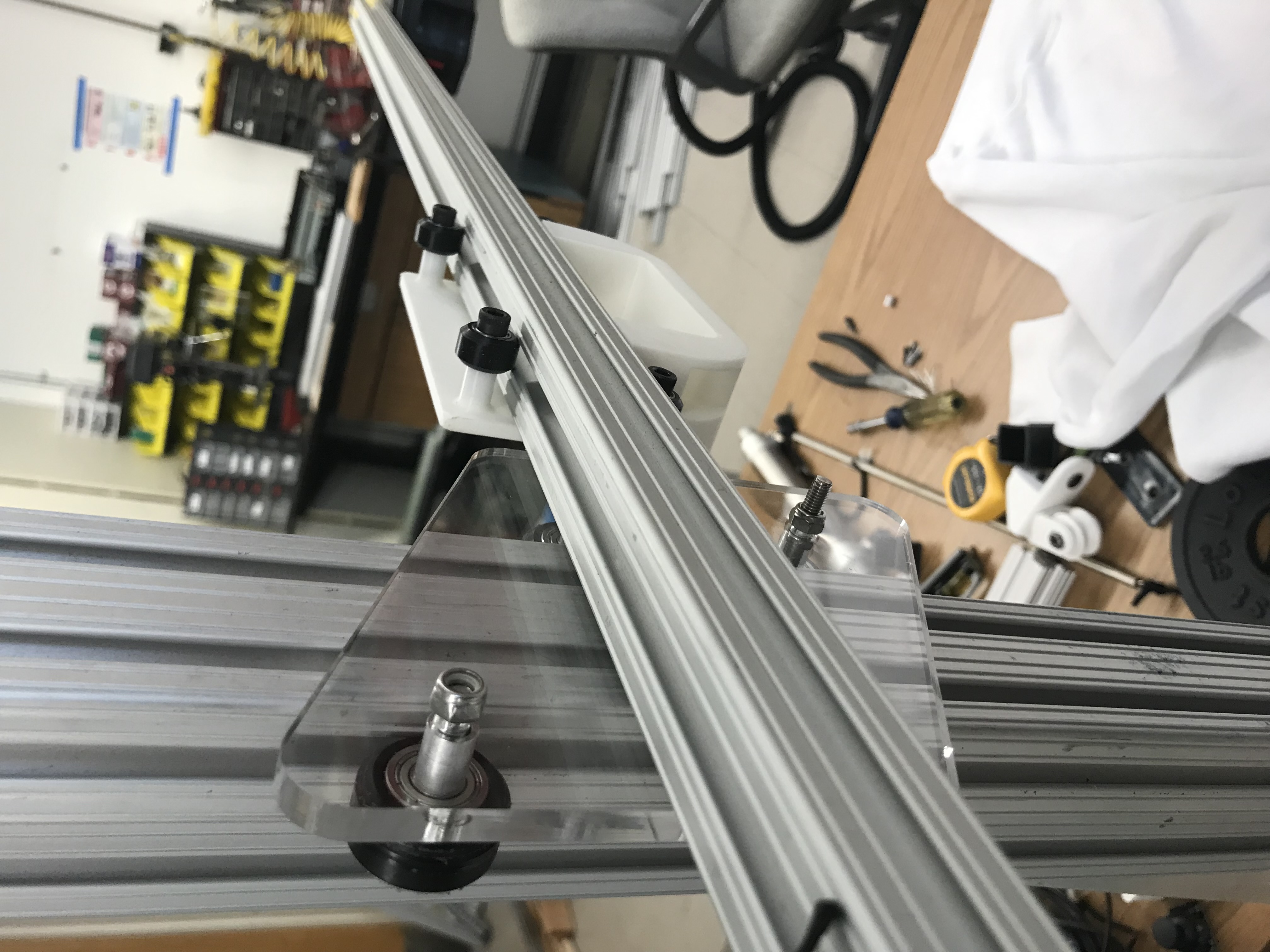
My work on AirSTEP resulted in a mechanism to provide feedback for the patients' arms as they used the device. While working on this mechanism, I developed my CAD skills, honed my 3D printing abilities, and had my first exposure to laser-cutting components.
While in the research group, I also had the opportunity to be the first person to try the newly motorized AirSTEP device, as seen in the banner image. Work on AirSTEP has continued since my departure from the group.